

JASP Bayes RM Anova - matched models

I'm very new to Bayes, and I am trying to run a Bayesian repeated-measures ANOVA to complement NHST analyses.
The RM ANOVA is 3x2, with Treatment (Control/Stress) X Visual Field (LVF/RVF) X Stimuli (Word/Non-Word).
The frequentist approach is revealing main effects of VF and Stimuli but no interaction effects:
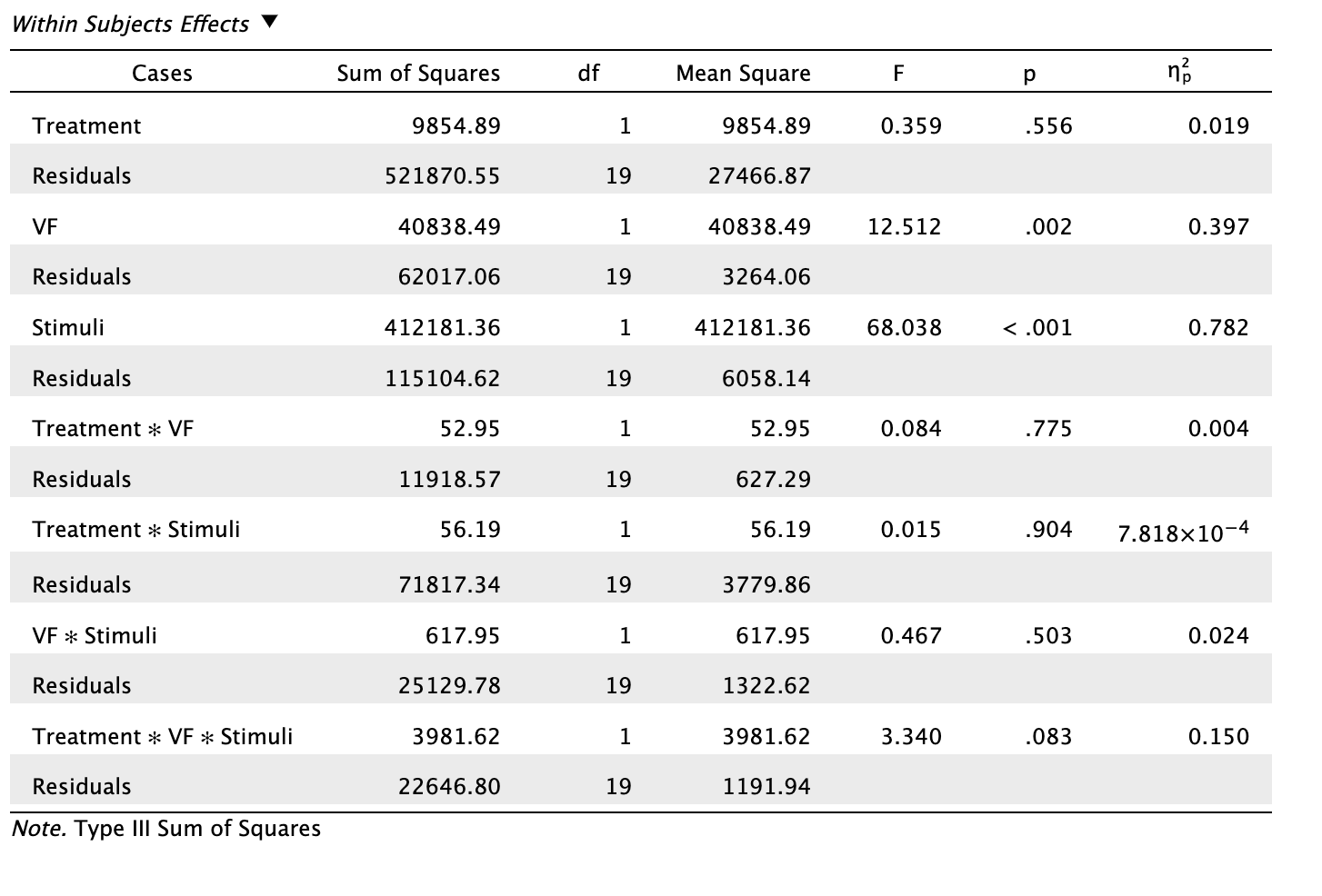
When trying to find information about whether to select "Across all models" or "Across matched models" when computing the Bayesian RM ANOVA, I read that "Across matched models" is more similar to a frequentist RM ANOVA as it only compares to models with the same predictors.
When I run the Bayes RM ANOVA selecting "Across matched models", it appears there is substantial evidence in support of the interaction:
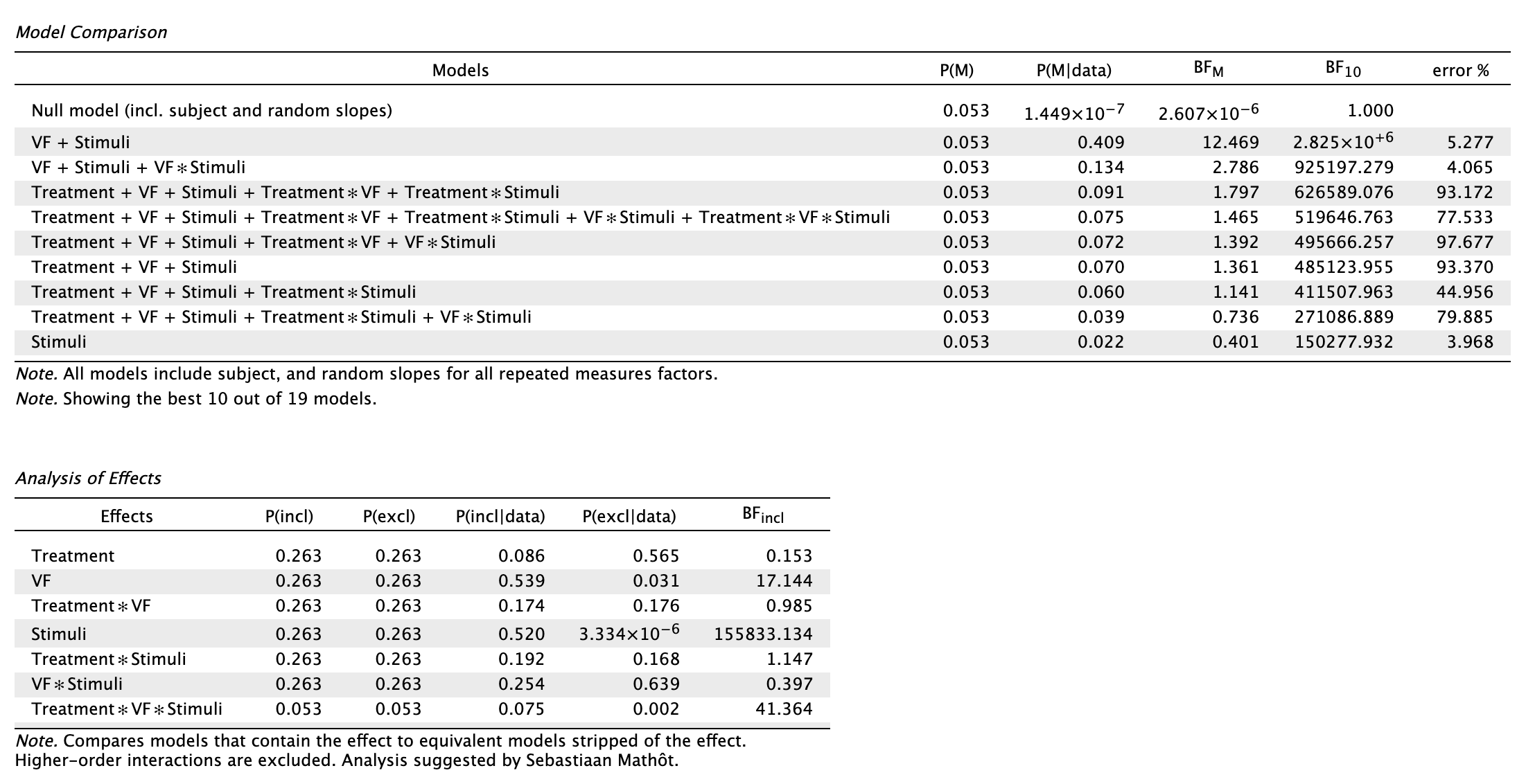
I'm surprised to see such a large BF (41) when it did not reach significance in the frequentist analysis (although the effect size appears large).
However, when I select the other option "Across all models", evidence in support of the interaction is anecdotal:
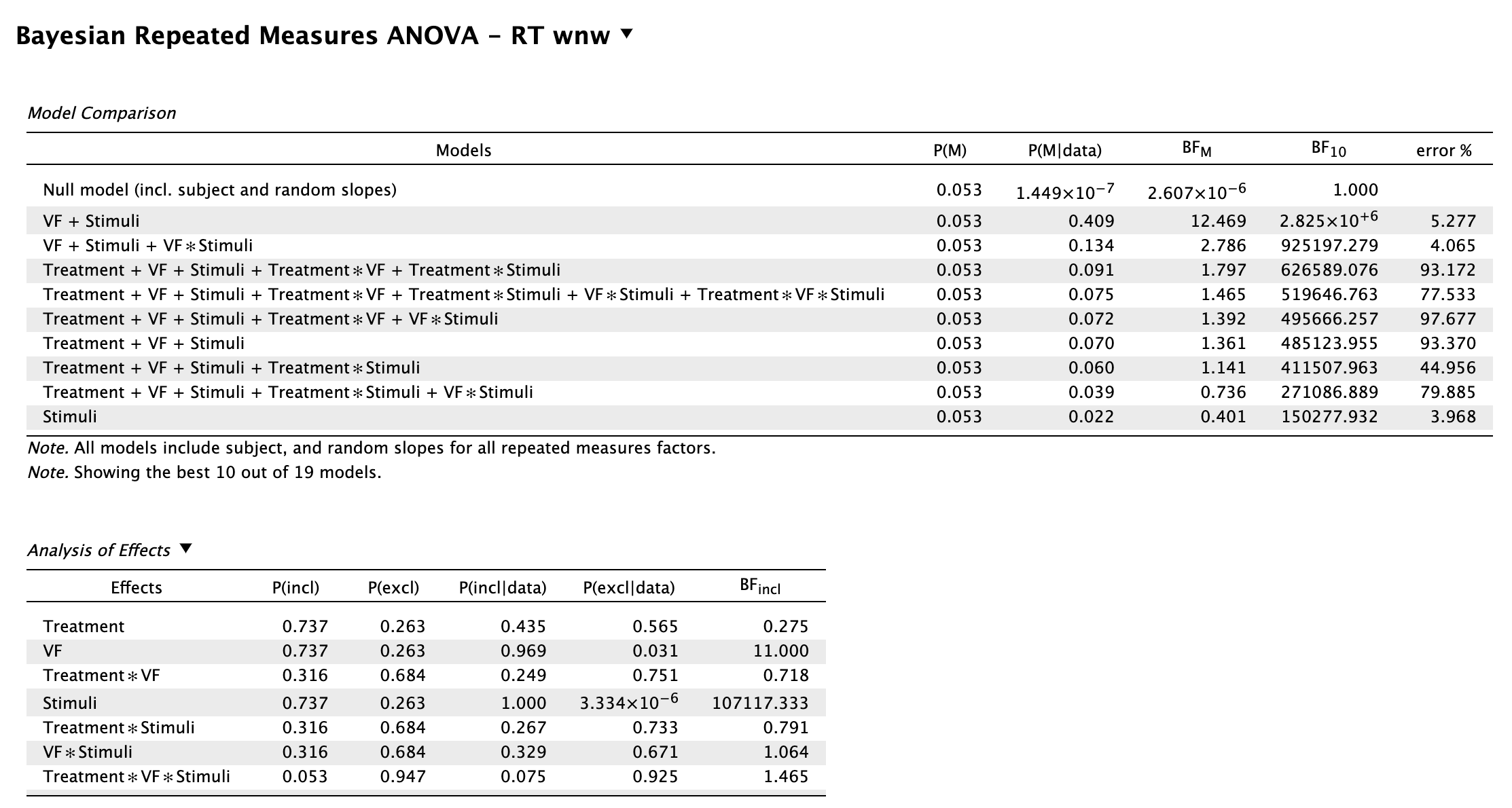
I guess I'm confused how the options can return such different results. I've read a few other posts querying this, but I'm still unclear what the best approach is.
So, my questions are:
1) Can somebody possibly provide a clearer definition explaining the difference between these two options?
2) Is one of these options more comparable with a frequentist RM ANOVA than the other?
Thanks in advance!
Comments
OK:
EJ